Ida Tarbell
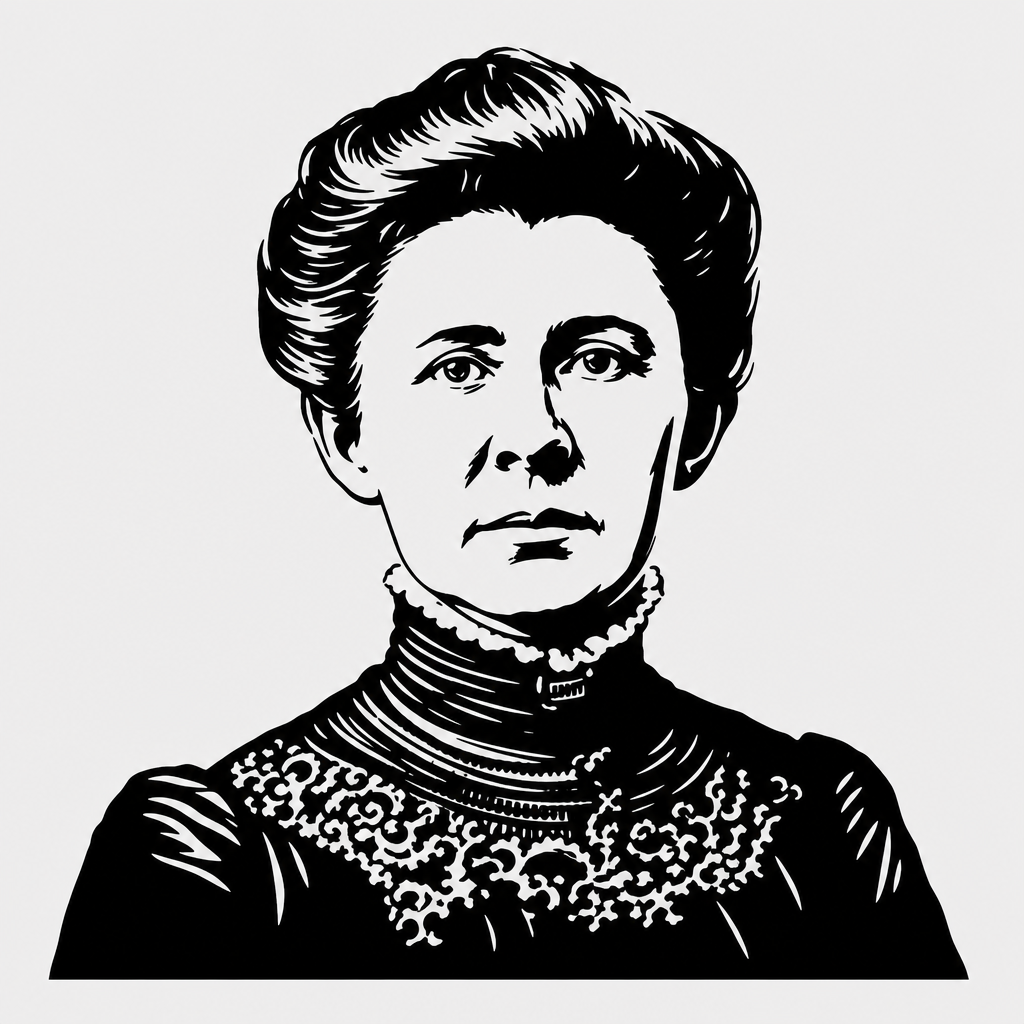
The Pamphlet That Survived
Standard Oil thought it had erased the evidence. In 1873, an obscure pamphlet titled The Rise and Fall of the South Improvement Company had laid out, in the dry language of legislative testimony, the secret scheme that John D. Rockefeller and a handful of allied refiners had struck with the railroads: rebates on every barrel they shipped, and — more breathtaking — a cut of the freight charges paid by their competitors. The scheme had caused an uprising in the Pennsylvania oil fields when it leaked, and in the years after, copies of the pamphlet quietly vanished. By the time anyone thought to look again, it was as if the whole affair had never been written down.
Nearly thirty years later, a tall, methodical woman in her mid-forties found the copy that survived, in the New York Public Library. She was not a lawyer or a prosecutor. She was a magazine writer named Ida Tarbell, and she had been fourteen years old — a daughter of the very oil region the scheme was built to strangle — when the South Improvement Company came for her father.
Between 1902 and 1904, Tarbell published a nineteen-part series in McClure’s Magazine called “The History of the Standard Oil Company.” It named names, printed figures, and reconstructed three decades of secret rates and swallowed competitors from court records, state investigations, and Standard’s own documents. It became, in the judgment of the oil historian Daniel Yergin, perhaps the most influential book about business ever published in the United States. In 1911, the Supreme Court ordered the most powerful corporation on earth broken to pieces. Tarbell did not do that alone — but she had written the public case for it, and she had done it with the one weapon Rockefeller’s money could not buy back: the documentary record.
She also, along the way, more or less invented modern investigative journalism.
Petrolia
Ida Minerva Tarbell was born on November 5, 1857, in a log farmhouse at Hatch Hollow in northwestern Pennsylvania. Her timing was terrible: the Panic of 1857 wiped out her family’s savings before she could walk, and her father, Franklin Tarbell, had to trudge home from Iowa across three states to see her. Then, when Ida was a toddler, timing turned. In 1859, at Titusville — some forty miles from her birthplace — a former railroad conductor named Edwin Drake drilled the world’s first commercially successful oil well, and the quiet creek valleys of western Pennsylvania became “Petrolia,” the site of the first oil boom in history.
Franklin Tarbell was a carpenter, and he saw his opening: the new industry was catching oil in whiskey barrels and open pits. He built wooden storage tanks, prospered, and moved the family into the boom country along Oil Creek, where derricks crowded the hillsides and the water ran iridescent. It was a childhood of mud, flush times, and sudden death. When Ida was three, an exploding well near Rouseville killed nineteen men, including Henry Rouse, the region’s leading citizen; she remembered all her life the community’s shock, and a later kitchen explosion that killed three women. The oil region taught her early that fortunes and lives in the new industrial America could vanish in an afternoon.
In 1870 the family moved to Titusville, into a house partly built from the salvaged timbers of a bankrupt boom-town hotel — a detail almost too on-the-nose for the region’s economy. Franklin had become an independent oil producer and refiner, one of hundreds of small operators who believed the Oil Region belonged to the men who worked it.
Then came the winter of 1872. Freight rates on the railroads suddenly doubled for independent producers — but not, it emerged, for a shadowy new entity called the South Improvement Company, whose members would collect rebates on their own shipments and drawbacks on everyone else’s. The region rose in fury: torchlight marches, embargoes, derricks draped in black. The scheme was formally annulled within months, but its chief architect, a thirty-two-year-old Cleveland refiner named John D. Rockefeller, simply changed tactics, and within a few years had absorbed most of the refining capacity of the country into what became the Standard Oil Trust. The independents’ world — Franklin Tarbell’s world — slowly suffocated. Years later a business partner’s suicide left her father saddled with debt. Ida watched what the defeat did to the proud, sociable man who had built the family’s life with his hands. “What had been undertaken,” she concluded, “was wrong.”
She was fourteen. It would take her thirty years to file her answer.
The Only Woman in the Room
Nothing about Tarbell’s path to that answer was direct. She wanted to be a scientist. In 1876 she enrolled at Allegheny College in Meadville, the only woman in her freshman class, and graduated in 1880 with a biology degree and a microscope she treasured. What the era offered a woman with a science degree was schoolteaching, so she taught — four languages and several sciences at a seminary in Poland, Ohio, for five hundred dollars a year — until the workload and the wages drove her out after two years.
She found her real training at The Chautauquan, a magazine attached to the era’s great adult-education movement, where she spent eight years learning every job in the shop and rising to managing editor. There she also learned to distrust received statistics: assigned a piece on women inventors, and told that only about three hundred existed, she went to the Patent Office and documented some two thousand.
Then, at thirty-four, she did something that alarmed everyone who knew her: she quit, moved to Paris with little money and less French, and set out to support herself by her pen while researching a biography of Madame Roland, the salon hostess guillotined in the French Revolution. She lived in the Latin Quarter, sold sketches of Parisian life to American newspapers, studied the methods of French historians at the Sorbonne — where she absorbed the discipline of building narrative strictly on verifiable documents — and interviewed Louis Pasteur. The Roland research delivered a lesson that shaped everything after: her heroine, examined closely, was not the independent mind Tarbell had imagined but a woman who had misjudged the revolution that killed her. Tarbell never again began a subject knowing what she would find.
One day in 1892 an American editor climbed the stairs to her flat, talked at whirlwind speed for a quarter of an hour, and borrowed forty dollars on his way out. This was S. S. McClure, founder of a cheap new illustrated monthly aimed at ordinary Americans. Hired first as a freelancer and then brought to New York, Tarbell wrote him a serialized life of Napoleon that doubled McClure’s circulation, then a life of Abraham Lincoln — for which she crisscrossed the country interviewing aging men and women who had known him, and unearthed hundreds of unpublished letters, speeches, and photographs. Rival Century Magazine sneered that McClure had “got a girl to write the Life of Lincoln.” The girl’s Lincoln series pushed circulation past 300,000 and made her one of the most famous journalists in America.
By 1901, McClure and his partners wanted the magazine to explain the great new fact of American life: the trusts. They chose the oldest and most perfect of them, Standard Oil. And they had on staff the one writer in America who had grown up inside its origin story.
The History of the Standard Oil Company
Tarbell spent roughly two years on research before the first installment appeared, and the method she improvised became the template for every investigative reporter since. She worked outward from paper: decades of court testimony, state and federal investigations, lawsuits by ruined competitors, newspaper files, freight schedules — hundreds of thousands of pages, including that lone surviving South Improvement pamphlet. Around the documents she layered interviews with oil men, lawyers, regulators, and academics. Her scientific training showed; early critics said her prose was “drowning in facts,” and she took the complaint as a compass heading. Vituperation, she believed, wearies the public. “The mind must be convinced.”
The most improbable of her sources sat inside the fortress itself. Henry H. Rogers — “Hell Hound Rogers” to Wall Street — was a Standard Oil vice president, an old oil-regions man who had known the Tarbells, and a friend of Mark Twain, who arranged an introduction. For about two years Rogers received Tarbell regularly at Standard’s headquarters at 26 Broadway, apparently confident he could manage the story into something favorable. He kept talking even after the installments began to land. The company’s other unintended contribution came, by most accounts, from an office boy assigned to burn records, who noticed the name of his Sunday-school teacher — an independent refiner — in documents showing that railroad agents were still tipping Standard off to competitors’ shipments. The papers reached Tarbell: proof that the old machinery of espionage and rebates was running in the present tense.
The series began in November 1902 and ran to nineteen parts. The famous issue of January 1903 carried Tarbell on Standard Oil, Lincoln Steffens on municipal corruption, and Ray Stannard Baker on labor racketeering — a single magazine number that is as good a birth certificate as any for American investigative journalism. Published as a two-volume book in 1904, The History of the Standard Oil Company told, coolly and chronologically, how a company of genuine organizational brilliance had reached its position of controlling, at its peak, roughly ninety percent of American refining: through secret rates, espionage, predatory pricing, and the patient destruction of anyone who declined to sell. What made the indictment devastating was its fairness. Tarbell admired Rockefeller’s executive genius and said so in print. Her charge was narrower and sharper than hatred of wealth: “They had never played fair, and that ruined their greatness for me.”
In 1905 she followed the series with a two-part character study of Rockefeller himself — the only time she laid down the historian’s mask. She had never been granted an interview; she studied him from a pew at his Cleveland church, and described “the oldest man in the world — a living mummy,” a man whose money-getting had consumed him. Rockefeller never answered publicly. “Not a word about that misguided woman,” he instructed his advisers — though privately he called her “that poisonous woman,” and, to his golfing companions, “Miss Tarbarrel.” When a Standard-friendly bank leaned on the magazine’s finances, and her own father warned her that Rockefeller would stop at nothing, her recorded reply was that of course it made no difference to her.
The Verdict
The government’s lawyers did the rest. Federal antitrust prosecutors filed suit against Standard Oil in 1906 under the long-dormant Sherman Act, and on May 15, 1911, the Supreme Court found the trust an illegal monopoly and ordered it dissolved into thirty-four separate companies. Tarbell’s series did not, by itself, break Standard Oil — but it had transformed a diffuse public resentment into a documented public case, and the wave of Progressive-era regulation that followed (the Hepburn Act, the Mann–Elkins Act, the Federal Trade Commission and Clayton Act of 1914) is hard to imagine without the climate her reporting created. The verdict came with an irony she recognized: shares in the thirty-four successor companies soared, and Rockefeller emerged richer than ever. The companies she helped unbundle — the ancestors of Exxon, Mobil, and Chevron — dominate the industry still. What changed was the rule: after 1911, no American corporation could assume it was too big to be called to account.
Tarbell, characteristically, refused the halo that came with the victory. When Theodore Roosevelt, in 1906, borrowed “the Man with the Muck-rake” from Pilgrim’s Progress to chide exposé journalists who never looked up from the filth, the label stuck to her above all — and she hated it. She was, she insisted, a historian; she had documented wrong, not wallowed in it. That same year she and most of McClure’s best writers walked out on their brilliant, erratic editor and bought The American Magazine, where her work turned toward what industry did right as often as what it did wrong.
The Complicated Miss Tarbell
The last four decades of Tarbell’s life keep her biographers honest, because she spent them refusing to be the person her legend required. The woman who had out-worked every man in American journalism wrote, starting in 1909, a series of articles and then a book — The Business of Being a Woman (1912) — arguing against women’s suffrage and celebrating the home as woman’s true sphere. Her own mother, a lifelong suffragist, was appalled; feminists never entirely forgave her. She never married, by choice, and built exactly the independent life she counseled other women against — a contradiction she seems to have understood and never resolved. After ratification she came around in print, affirming that twenty million women “did vote and should vote.”
She remained a public figure of the first rank: a trustee of Allegheny College for three decades, a member of Wilson’s wartime Women’s Committee of the Council of National Defense and his 1919 Industrial Conference, a reporter at the Paris peace, a lecturer who once played forty-nine towns in forty-nine days. Some later work aged badly. Her admiring 1925 biography of U.S. Steel’s Elbert Gary and a startlingly soft 1926 magazine series on Mussolini led critics to write about “the taming of Ida Tarbell,” and the Mussolini pieces remain a real stain on her record. She published her autobiography, All in the Day’s Work, at eighty-two, and was still writing — a book to be called Life After Eighty — when pneumonia took her on January 6, 1944, at Bridgeport Hospital in Connecticut, near the Easton farm she had worked since 1906.
Time has settled her rank. In 1999, New York University’s survey of the century’s American journalism placed The History of the Standard Oil Company fifth on the all-time list. Her Connecticut farmhouse is a National Historic Landmark; her face has been on a postage stamp; the training of investigative reporters still follows the trail she blazed — documents first, fairness to the target, and the patience to read the freight receipts. The girl from the oil region proved something that has needed proving again in every generation since: that a private citizen with public records, endless patience, and a mass audience can hold the most powerful institution in the country to account. The muckrakers got their name as an insult. Because of Ida Tarbell, it became an honor.
Sources & Further Reading
- Ida M. Tarbell, The History of the Standard Oil Company (McClure, Phillips & Co., 1904) — the work itself; full text freely available via Project Gutenberg and the Internet Archive.
- Ida M. Tarbell, All in the Day’s Work: An Autobiography (Macmillan, 1939).
- Kathleen Brady, Ida Tarbell: Portrait of a Muckraker (University of Pittsburgh Press, 1989) — the standard modern biography.
- Steve Weinberg, Taking on the Trust: The Epic Battle of Ida Tarbell and John D. Rockefeller (W. W. Norton, 2008).
- PBS American Experience, “The Rockefellers: Ida Tarbell” — https://www.pbs.org/wgbh/americanexperience/features/rockefellers-tarbell/
- The Ida M. Tarbell Collection, Merrick Archives, Allegheny College — https://sites.allegheny.edu/library/special-collections/ida-m-tarbell-collection/
- Connecticut History, “Ida Tarbell: The Woman Who Took On Standard Oil” — https://connecticuthistory.org/ida-tarbell-the-woman-who-took-on-standard-oil/