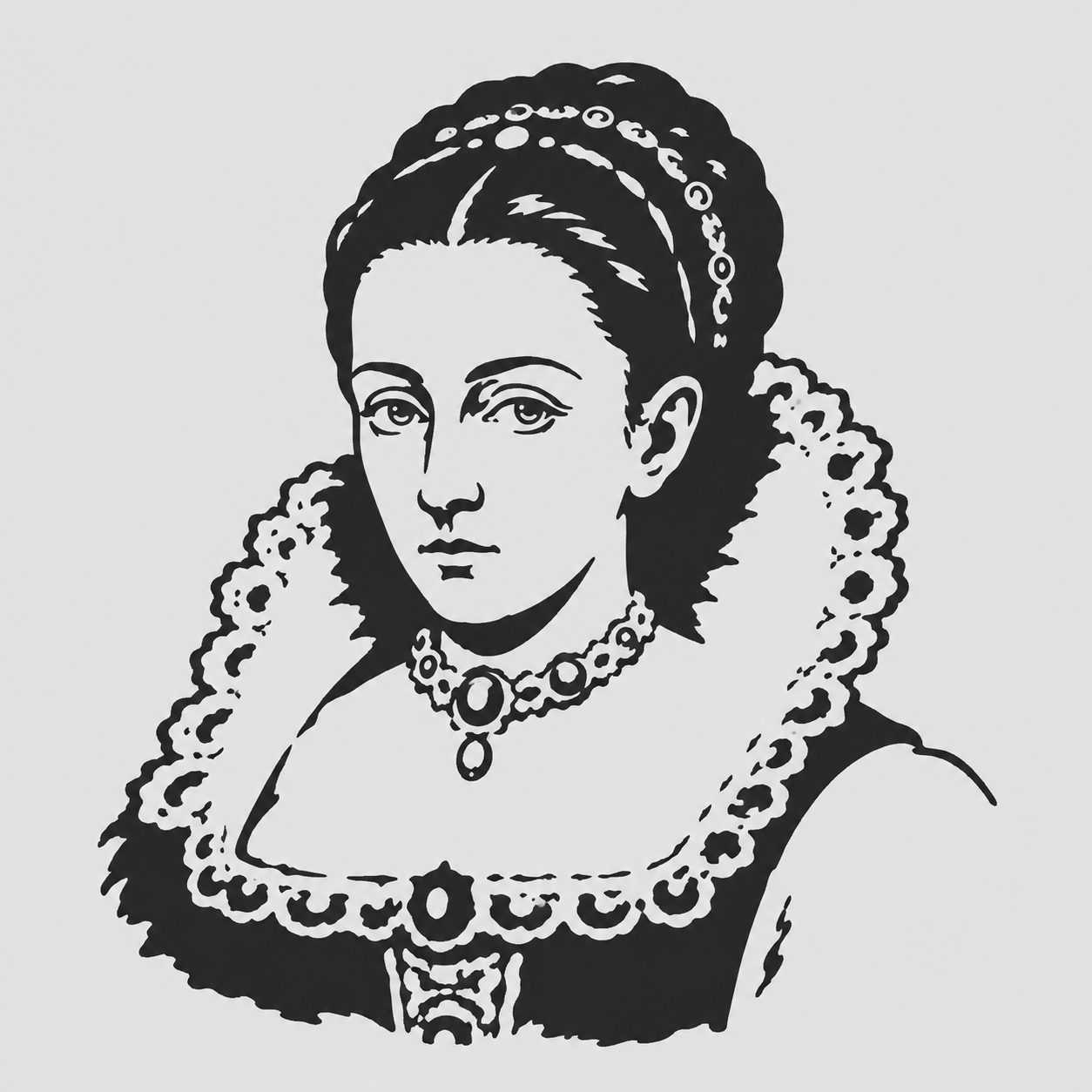
Elizabeth Báthory
On a winter night in December 1610, soldiers burst into Castle Čachtice in the Kingdom of Hungary and found girls, dead and dying, bearing marks of torture in the lower rooms. Countess Elizabeth Báthory was never arrested and never tried. Instead she was walled into a set of rooms in her own castle, where she died three and a half years later — already transformed into the “Blood Countess,” the noblewoman who supposedly bathed in the blood of virgins. What makes her different from history’s other villains is unsettling: we are not sure she did it.
Born in 1560 into one of Eastern Europe’s most powerful families — her uncle became King of Poland — Elizabeth received an exceptional education, married Count Ferenc Nádasdy at fifteen, and spent decades competently running vast estates while her husband fought the Ottomans. She was also dangerously exposed: a wealthy Protestant widow in a Catholic empire, aunt to a Transylvanian prince who threatened the Habsburg throne, and creditor to a king who owed her a large debt — a debt cancelled upon her arrest.
The investigation led by Palatine György Thurzó gathered over 300 witness statements describing torture and killings on a horrifying scale, and four of her servants confessed — under torture — before being executed. Yet Elizabeth was never allowed to defend herself in court, the physical evidence was described but not preserved, and the famous blood-bath detail appears in no contemporary source at all; it surfaced more than a century after her death as folklore. Since the 1980s, some historians have argued she was framed by men who wanted her land and her family neutralized; others find the specific, consistent first-hand testimony hard to dismiss. The truth may lie in between: a cruel aristocrat whose real abuses were exaggerated into legend by enemies who profited from her fall.
Elizabeth Báthory died in her sleep on August 21, 1614. Four centuries on, she remains imprisoned in the castle of her own legend — a warning about aristocratic cruelty, or about how easily a powerful woman could be destroyed by accusation, and quite possibly both.