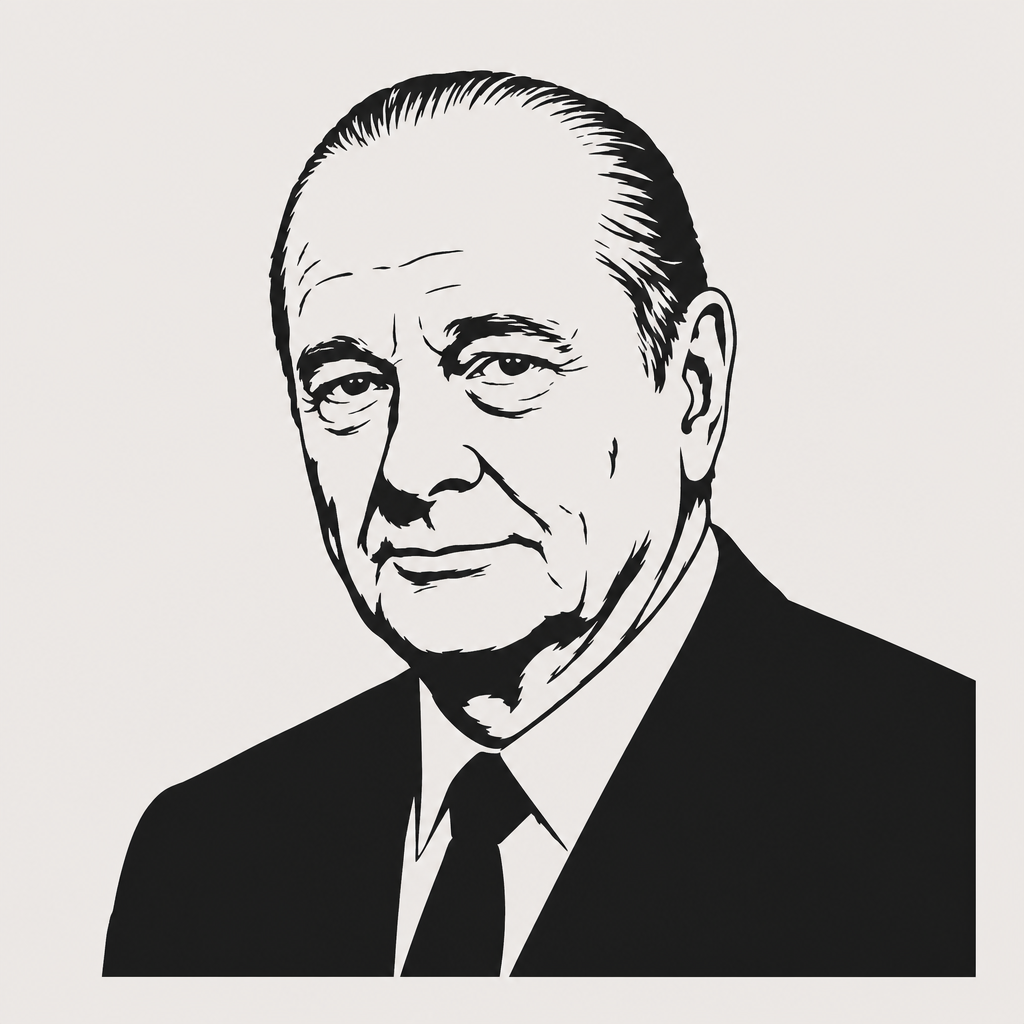
Jacques Chirac
On 16 July 1995, beside the site of a vanished Paris cycling stadium, a president elected barely two months earlier said the thing eight predecessors had refused to say for fifty years. On that same date in 1942, French police had rounded up thousands of Jews and herded them into the Vélodrome d’Hiver before shipping them east — an act the official Republic had always blamed on a criminal parenthesis called Vichy. Jacques Chirac tore the fiction down: “the criminal folly of the occupier was seconded by the French, by the French state.” France, that day, “committed the irreparable.” It was unforced moral clarity from the least likely man in French politics.
For Chirac was a career opportunist. Born in Paris in 1932 but rooted in rural Corrèze, he was a restless boy who once shipped out on a coal steamer to become a merchant sailor before his banker father marched him back to the elite track. Georges Pompidou, spotting his ferocious drive, called him “my bulldozer” and pushed him into politics. He rose by discarding loyalties as fast as beliefs — abandoning one Gaullist patron in 1974, undercutting the president he had served, running Paris City Hall for eighteen years as a patronage machine, and swinging from anti-European nationalist to champion of the euro without apparent strain.
He reached the Élysée on his third try, in 1995, and governed for twelve years historians find thin on reform. Yet alongside the Vél d’Hiv speech came other acts of nerve: in 2002, a nation that could not stand him re-elected him with 82 percent to bar the far right; in 2003, he refused to join the invasion of Iraq and was largely vindicated. The same career held the 1991 “noise and the smell” speech borrowing far-right themes, and, in 2011, the first criminal conviction of a French head of state since Vichy’s own leader — for the fake municipal jobs of his City Hall years.
When he died in 2019, France gave him a day of mourning and, within a few years, ranked him its most admired politician. The tidy verdict — crook or statesman — is the one thing his life will not support. His countrymen convicted him and loved him, and both judgments were about the same qualities; asked to choose between the opportunist and the man of conscience, they declined.