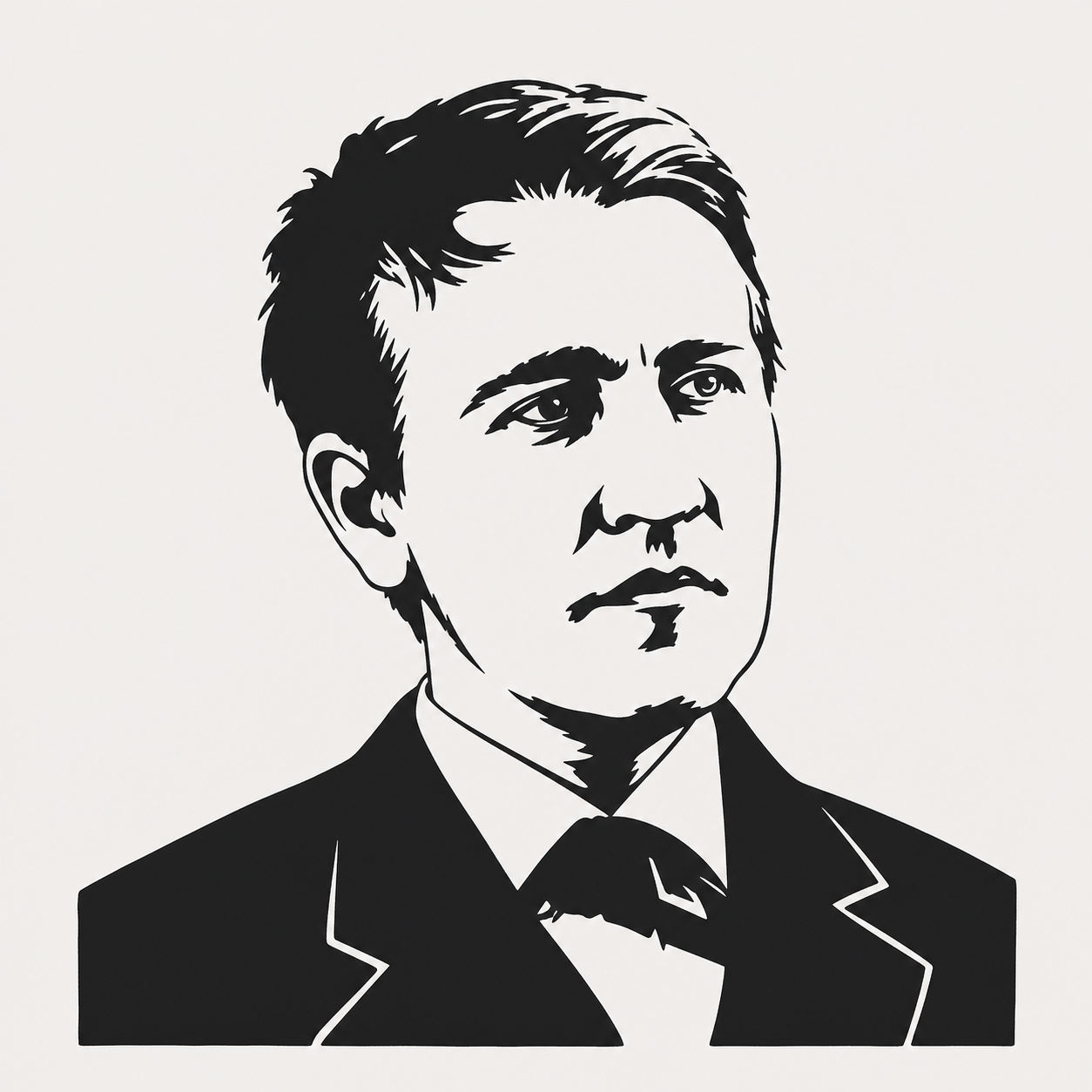
Thomas Edison
In the winter of 1877, Thomas Edison spoke into a strange little machine in his Menlo Park laboratory, turned the crank, and heard it speak back. The tinfoil phonograph was fragile and barely practical, but a machine had captured and replayed a human voice for the first time, and the newspapers crowned him the Wizard of Menlo Park. The nickname was catchy — and misleading. Edison was not a wizard; he was something more modern: an inventor who treated invention as a process that needed laboratories, machinists, patents, investors, publicity, and markets.
Born on February 11, 1847, in Milan, Ohio, Edison was a largely self-educated child who spent barely any time in formal school. At twelve he was selling newspapers on the Grand Trunk Railroad; as his hearing failed, telegraphy became his first real technical world, teaching him how information moved and how small improvements became valuable. His first patent, an electric vote recorder that legislators refused to want, taught him a lasting lesson: invent only what people will actually buy.
At Menlo Park, New Jersey, Edison built the “invention factory” — a laboratory staffed with skilled collaborators and aimed at producing a minor invention every ten days. Its most famous product was not just the incandescent light bulb but the entire electrical system around it: filaments, dynamos, meters, wiring, and the Pearl Street station that began powering lower Manhattan in 1882. The industry he helped create soon outgrew him; by 1892 the mergers that formed General Electric had dropped his name from the title.
Edison kept working from his larger West Orange laboratory — improving the phonograph, helping launch motion pictures, developing storage batteries, and absorbing expensive failures like his ore-milling venture. When he died on October 18, 1931, holding a record 1,093 U.S. patents, President Hoover asked Americans to dim their lights in tribute. His deepest legacy was not any single device but the model behind them all: invention as organized, industrial work — repeated until the world changed shape around it.