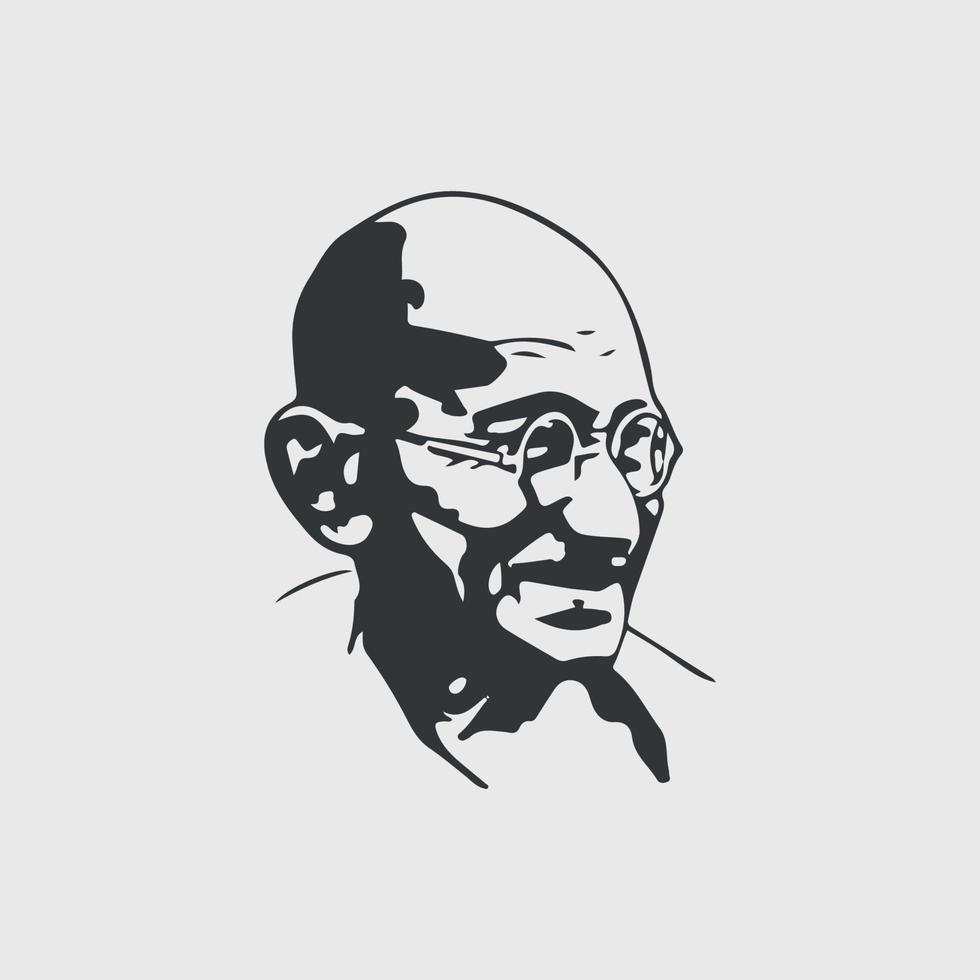
Mahatma Gandhi
On March 12, 1930, a 61-year-old man in a homespun loincloth set out to walk 241 miles to the sea and make salt. To the British Empire, which taxed even this basic necessity, the gesture seemed too absurd to notice — the viceroy wrote that the prospect kept no one awake at night. But as Mohandas Gandhi marched, his following swelled from dozens to thousands, and when he scooped up a handful of illegal salt at Dandi, millions across India followed. The empire that governed 300 million people found itself negotiating with a 100-pound man it could neither intimidate nor ignore.
Born in 1869 in Porbandar, Gujarat, Gandhi was a shy, mediocre student who failed as a young lawyer in Bombay — too timid to cross-examine witnesses. The transformation came in South Africa, where he had gone in 1893 for a year’s legal work and stayed twenty-one. Thrown off a train at Pietermaritzburg for refusing to leave the first-class compartment, beaten and humiliated for his race, he chose to fight — and developed satyagraha, “truth-force”: disciplined nonviolent resistance that refuses to cooperate with unjust laws and accepts suffering without retaliation. It won real concessions from the South African government, and when Gandhi returned to India in 1915, he scaled the method up to a nation.
As leader of the Indian National Congress he turned an elite talking shop into a mass movement, filled the streets with hundreds of thousands of nonviolent protesters, and spent years in British jails. Independence came in August 1947 — but joined to the partition he had opposed with every fiber of his being, and to communal slaughter that killed hundreds of thousands. Gandhi refused to celebrate; he walked into the killing fields, fasting to stop the violence. On January 30, 1948, a Hindu nationalist who thought him a traitor to Hinduism shot him dead on his way to prayer.
Gandhi’s legacy is more complicated than sainthood — his political and economic judgments were sometimes poor, and some of his personal experiments strike modern readers as exploitative. But the core achievement stands: he defeated an empire with moral force rather than arms, and his methods shaped the American civil rights movement, the anti-apartheid struggle, and democratic revolutions across the world. He asked to be remembered not as a saint but “as a man who tried to follow truth.”