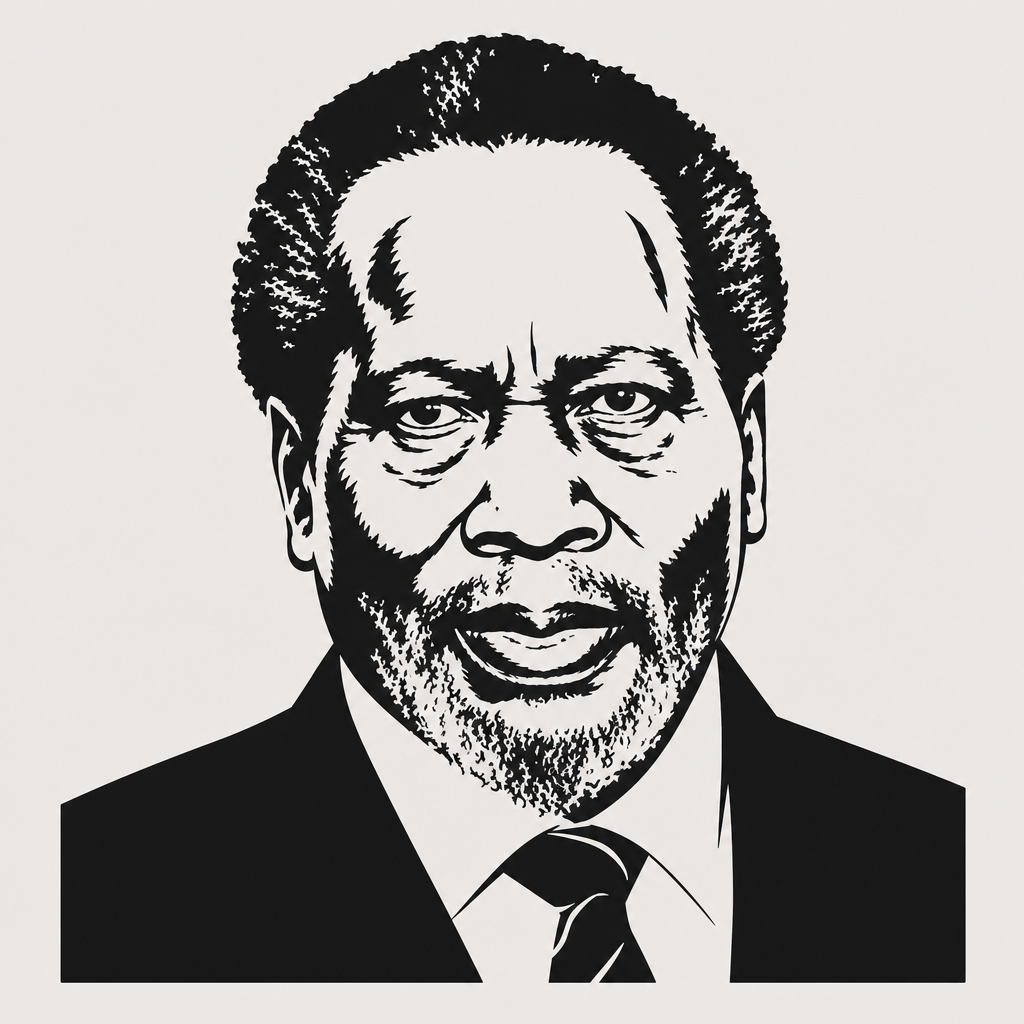
Jomo Kenyatta
In December 1952, in a remote schoolroom-turned-courtroom at Kapenguria — no telephone, no railway, visitors by permit only — the British Empire tried Jomo Kenyatta for “managing” the Mau Mau rebellion. The judge had been secretly promised £20,000; the star witness later swore he had lied for a reward. The deepest irony sat in the dock: weeks before his arrest, Kenyatta had publicly cursed Mau Mau, and the movement’s real militants thought him too moderate. The empire convicted the wrong man on bought evidence — and in doing so manufactured the martyr who would become the founding father of Kenya.
He was born Kamau, around 1897 — no record was kept, and even he never knew his birthday — to Kikuyu farmers in a colony where the best land was reserved for white settlers. A mission education, a Nairobi clerk’s job, and a beaded belt called a kinyata gave him a new name; fifteen years in Europe gave him the rest. At the London School of Economics he wrote Facing Mount Kenya (1938), the first anthropological study of an African people by one of its own, and in 1945 he helped convene the Pan-African Congress that turned petitioning into mass politics.
After nearly nine years of prison and desert exile — the governor had called him “the African leader to darkness and death” — he walked free in 1961 and stunned the world. At Nakuru in 1963 he told three hundred fearful white farmers that Kenya would forgive and forget the past, and they cheered him. As prime minister from 1963 and president from 1964, he delivered stability and growth that most new nations could only envy. But forgiveness flowed upward, not down: land went to the connected — his own family amassed vast holdings — Mau Mau veterans were told to be forgotten, and critics kept dying: Pio Gama Pinto in 1965, Tom Mboya in 1969, J. M. Kariuki in 1975. No court ever tied the murders to Kenyatta’s word, but every investigation died, and the one-party state endured.
He died in his sleep in August 1978, and power passed peacefully — itself a rarity then. The verdict his life keeps forcing: he forgave the empire that jailed him, but not the poor who asked for the land the fight had been about. The nation he founded still lives inside that contradiction.