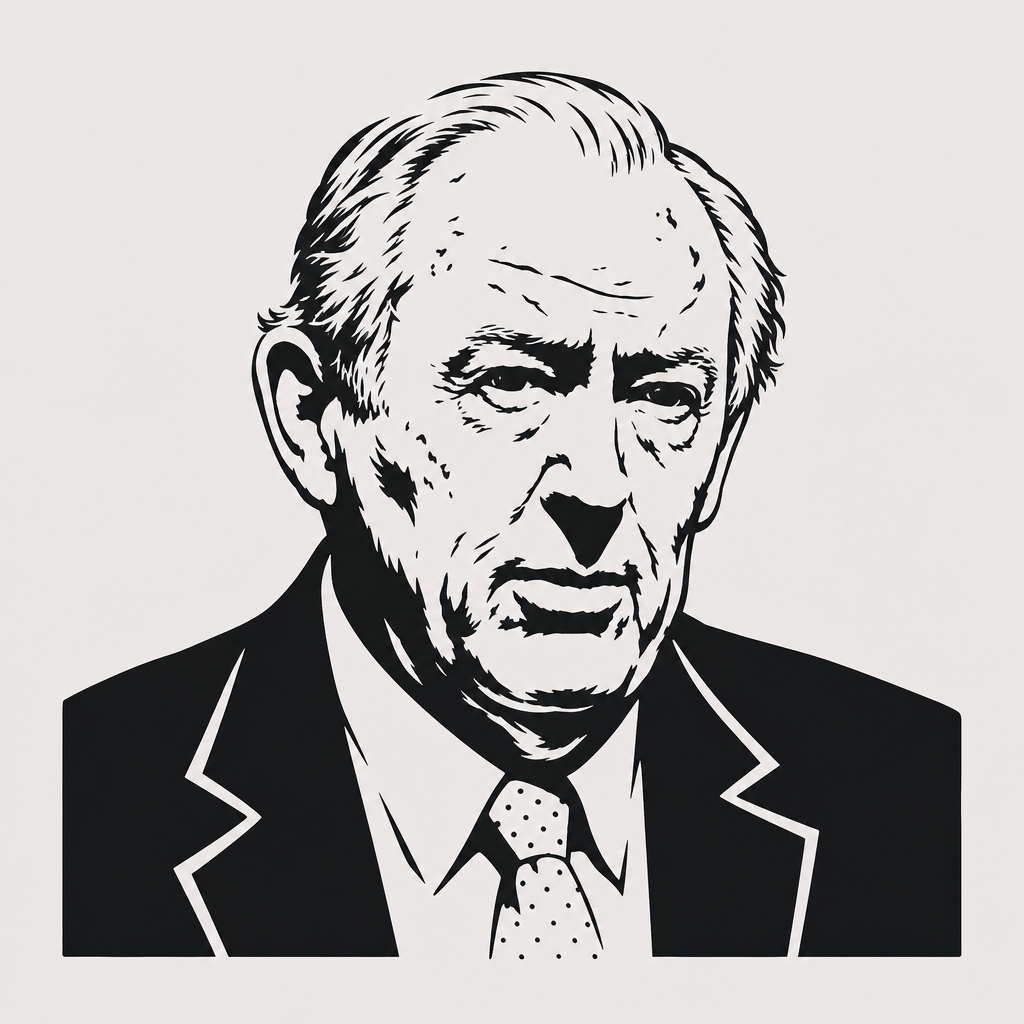
Richard Leakey
In July 1989, Richard Leakey built a pyre of about twelve tons of confiscated elephant tusks and had Kenya’s president set it alight. Selling the ivory would have funded conservation; burning it, he argued, was the only way to make ivory worthless and poaching pointless. The gesture helped push through an international ivory ban, and Kenya’s collapsing elephant herds began to recover. It was pure Leakey: theatrical, defiant, and effective. A man famous for digging up humanity’s past had become, overnight, the world’s best-known defender of a living species.
He was born in Nairobi in 1944 into the most celebrated name in the study of human origins — son of Louis and Mary Leakey — and spent his youth trying to escape it. He dropped out of school around sixteen, never earned a university degree, and ran a skeleton-supply business and photographic safaris before returning to the family trade on his own terms. By twenty-five he directed the National Museums of Kenya, and his teams at Koobi Fora on Lake Turkana pulled hundreds of hominin fossils from the ground. The finds were spotted mostly by Kenyan field workers, the “Hominid Gang” led by Kamoya Kimeu, who in 1984 found the near-complete Homo erectus skeleton the world calls “Turkana Boy.”
Then Leakey kept trading one career for a harder one. From fossils he moved to running Kenya’s wildlife service, where his shoot-to-kill anti-poaching war saved elephants at a human cost he rarely dwelled on. A 1993 plane crash — which he always suspected was sabotage — took both his legs below the knee. Undeterred, he founded the opposition party Safina, was beaten by government thugs, won a parliamentary seat, and was later recruited by the same government to lead an anti-corruption purge of the civil service. He lived for decades on transplanted organs and prosthetic legs.
Richard Leakey died near Nairobi in January 2022 at seventy-seven. His legacy is large and honestly mixed: foundational fossils and a research institute that outlives him, elephants that survived because he fought without flinching, and a conservation triumph bundled with real moral cost. He was no saint, and would have been bored by the suggestion — just a restless, self-made man who could not stop picking fights that mattered, and paid for each with his body.