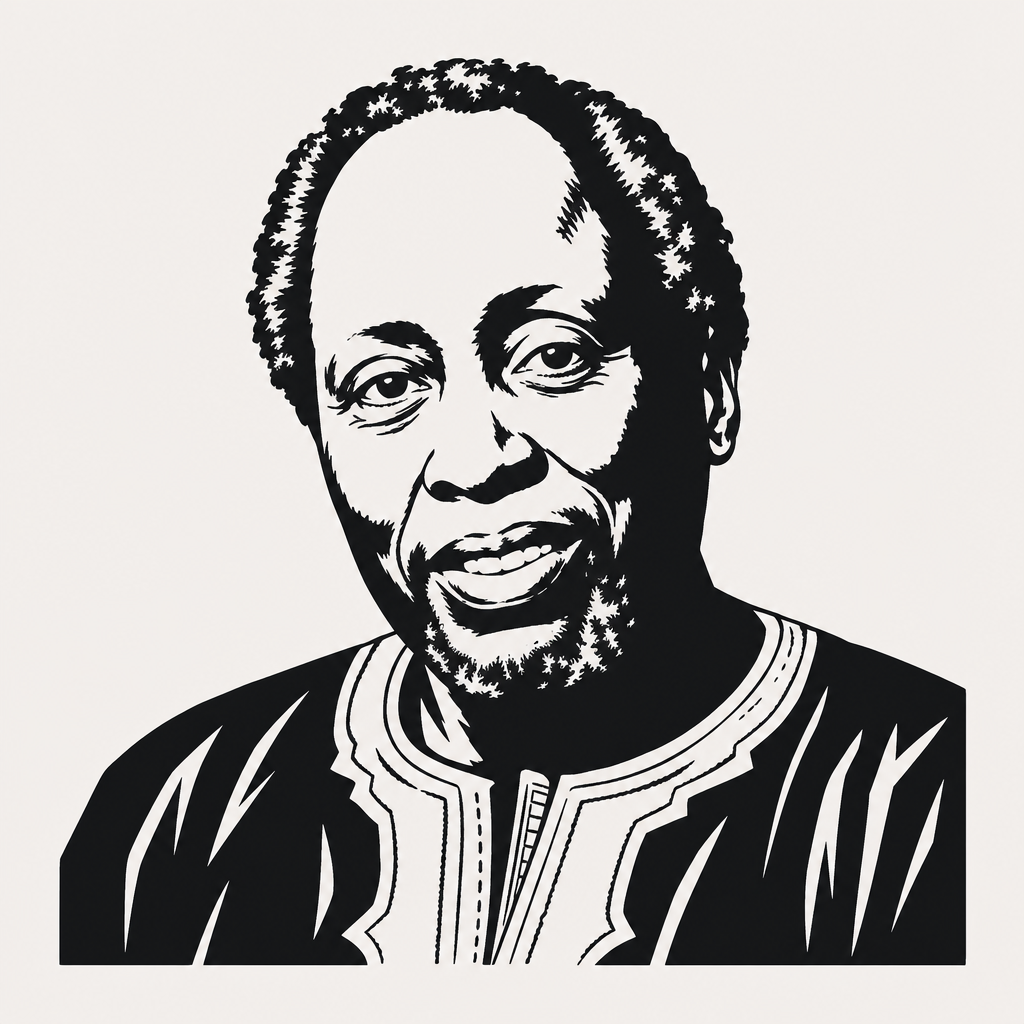
Ngũgĩ wa Thiong'o
In 1978, in cell 16 of Kamiti Maximum Security Prison, Ngũgĩ wa Thiong’o hoarded the coarse toilet paper the guards issued as a humiliation — because it held ink. Detained without charge or trial over a play, he used those rough squares to draft Devil on the Cross, the first modern novel written in his native Gikuyu. He walked out having made the decision that would define his life and echo through world literature: his fiction would no longer speak the language of the people who had colonized him.
He was born in 1938 in Kamiriithu, in British-ruled Kenya, one of a dispossessed farmer’s roughly two dozen children, and the colonial classroom renamed him James. School punished children for speaking Gikuyu while the Mau Mau war destroyed his family: a brother in the forest with the fighters, a deaf half-brother shot in the back for not hearing an order to halt, his village razed while he studied at an elite boarding school. Mastering English made him famous — Weep Not, Child (1964) is widely described as the first English-language novel published by an East African — before he shed the name James and, eventually, the language itself.
The break came through theater. In 1977 his Gikuyu play I Will Marry When I Want, performed by peasants and workers in an open-air theater they built themselves in Kamiriithu, drew thousands — and a detention order. After prison came twenty-two years of exile under the Moi regime, which razed the village theater, seized his novel Matigari after reportedly mistaking its hero for a real agitator, and left him to argue his case from abroad in Decolonising the Mind (1986), the book that called language colonialism’s “cultural bomb.” His 2004 homecoming turned violent when gunmen attacked him and his wife Njeeri in their Nairobi apartment; they finished the book launch anyway.
He died in May 2025 in Georgia at eighty-seven — a perennial Nobel favorite who never got the call and said he preferred the “Nobel of the heart.” His last years were shadowed by his son Mukoma’s public allegation, never tested in court and disputed within the family, that Ngũgĩ had abused his late first wife. His monument is an argument: after Ngũgĩ, no one writing from a colonized place could avoid the question of why they wrote in the empire’s language at all.