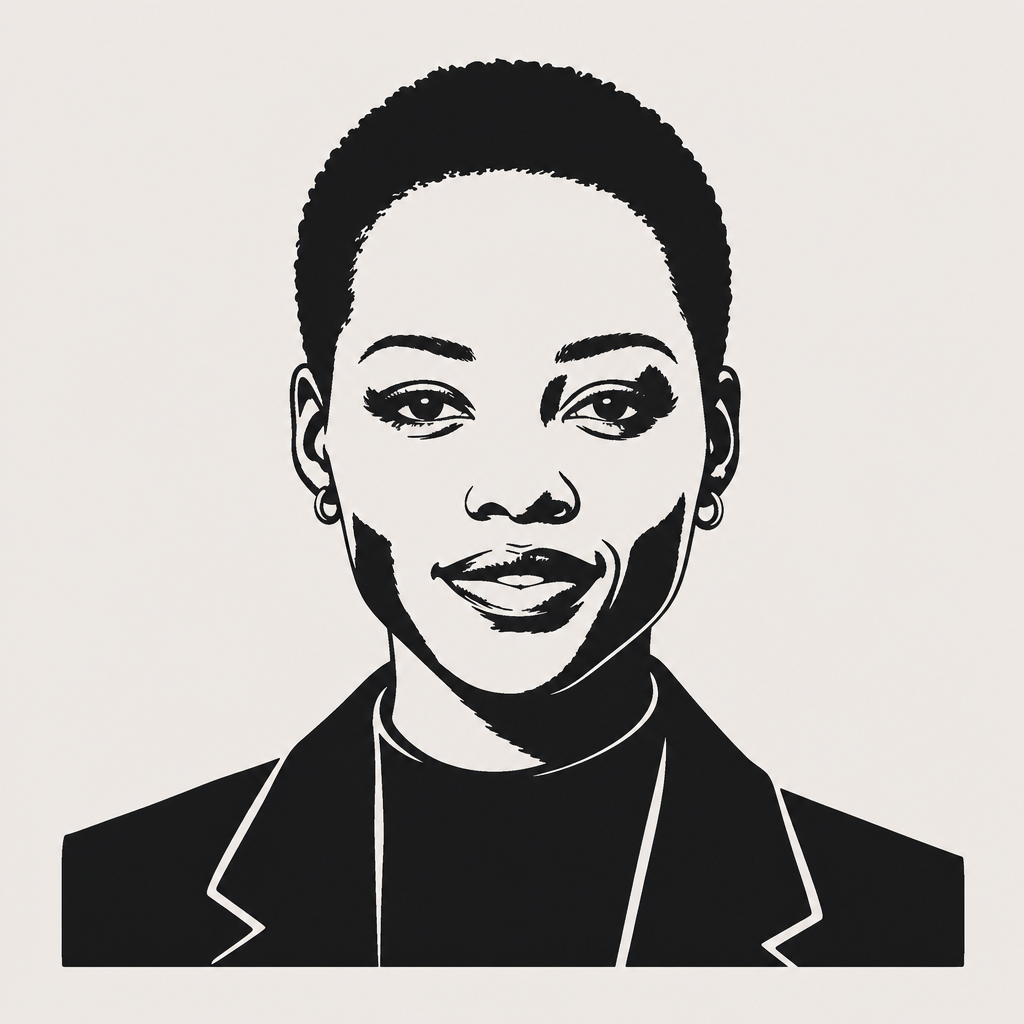
Lupita Nyong'o
Days before the 2014 Oscars, Lupita Nyong’o stood before a room of Black women in Hollywood and read a stranger’s letter: a girl wrote that she had been about to buy skin-bleaching cream “when you appeared on the world map and saved me.” Then Nyong’o admitted that as a child in Kenya she had prayed, night after night, to wake up lighter-skinned. Three days later she won the Academy Award for Best Supporting Actress for 12 Years a Slave — her first feature film — becoming the first Kenyan and first Mexican actress to win an acting Oscar. “No matter where you’re from,” she said, “your dreams are valid.”
She was born in Mexico City in 1983 because her family could not safely stay in Kenya: her father, democracy activist Anyang’ Nyong’o, had fled Daniel arap Moi’s regime after Lupita’s uncle was thrown from a ferry and disappeared. Raised in Nairobi in a family that treated public courage as a duty, she acted Juliet at fourteen, ran errands on the set of The Constant Gardener, made a documentary about Kenyans with albinism, and then trained for three years at the Yale School of Drama. She was cast as Patsey — the brutalized enslaved woman at the moral center of 12 Years a Slave — days before graduation.
Instead of letting Hollywood strand her in one lane, she scattered: a motion-capture alien in Star Wars, a Tony-nominated turn in Broadway’s Eclipsed, the spy Nakia in the billion-dollar Black Panther, a terrifying double role in Jordan Peele’s Us, and Sulwe, her bestselling picture book about a girl “the color of midnight.” In 2017 she broke what she called a “conspiracy of silence,” describing Harvey Weinstein’s harassment in a New York Times op-ed — the one account he singled out to deny.
She keeps breaking silences. In 2025 she revealed a decade-long struggle with uterine fibroids — diagnosed the same year she won the Oscar — and took the fight for research funding to Capitol Hill, while playing Viola in Central Park opposite her real brother as Sebastian. Born in exile with three passports, taught to pray away her own face, she made visibility itself her life’s work: not just being seen, but widening the frame for everyone behind her.