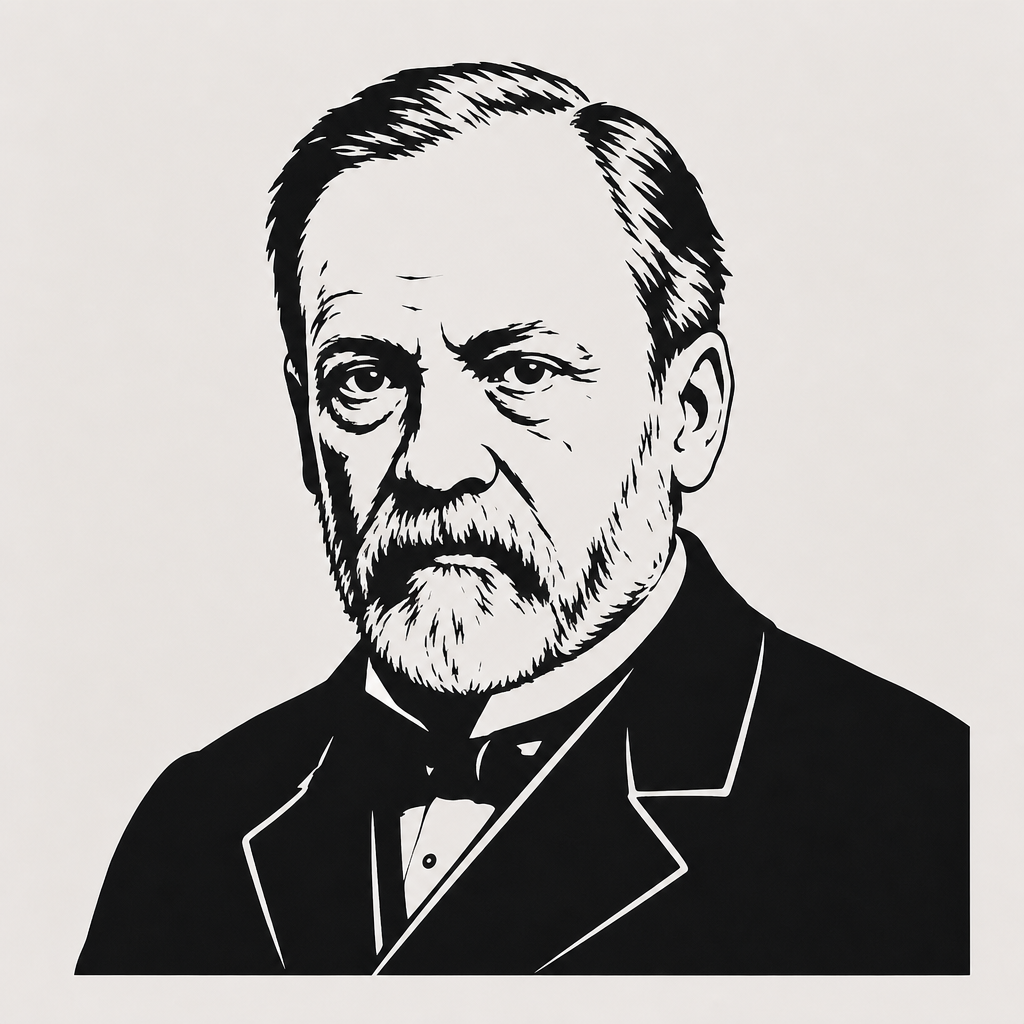
Louis Pasteur
On July 6, 1885, an aging chemist with no medical licence and a body half-paralyzed by stroke decided to inject an untested rabies treatment into a nine-year-old boy. Joseph Meister had been bitten fourteen times by a rabid dog; untreated, he would likely die. Louis Pasteur had protected dogs with his vaccine but never a human being, and by any modern measure the evidence was thin and the consent nonexistent. Over ten days the boy received a graded series of increasingly virulent injections — and lived. It was the most famous gamble of a career built on staging exactly such decisive, public moments.
He was born in 1822 in Dole, in eastern France, the son of a Napoleonic veteran turned tanner, and was an unhurried student once marked “mediocre” in chemistry. Yet in 1848, at twenty-five, bent over a microscope, he sorted mirror-image crystals by hand and showed that molecules can be left- and right-handed — the founding insight of stereochemistry. From that quiet beginning he climbed: fermentation is the work of living microbes, not mere chemistry; the elegant swan-neck flask that killed the doctrine of spontaneous generation; gentle heating that preserves wine and milk, the process we still call pasteurization.
Then germ theory turned toward disease. An aged, weakened culture revealed the principle of the attenuated vaccine, and in June 1881 Pasteur staged a triumph at Pouilly-le-Fort, where vaccinated sheep stood healthy while unvaccinated ones died before a watching crowd. Rabies followed, and Meister, and worldwide fame. In 1888 the Institut Pasteur opened in Paris; he died in 1895 and was laid in a crypt beneath it, a secular saint of France.
For a century the story was pure heroism. Then his notebooks were opened, and historians found a messier man: the Pouilly-le-Fort vaccine was a collaborator’s chemical method he publicly credited to himself, the rabies evidence was overstated, and rivals and assistants went uncredited. None of it makes the science wrong. It makes him human — frequently right, occasionally cutting corners, and always in control of the story the world was told.