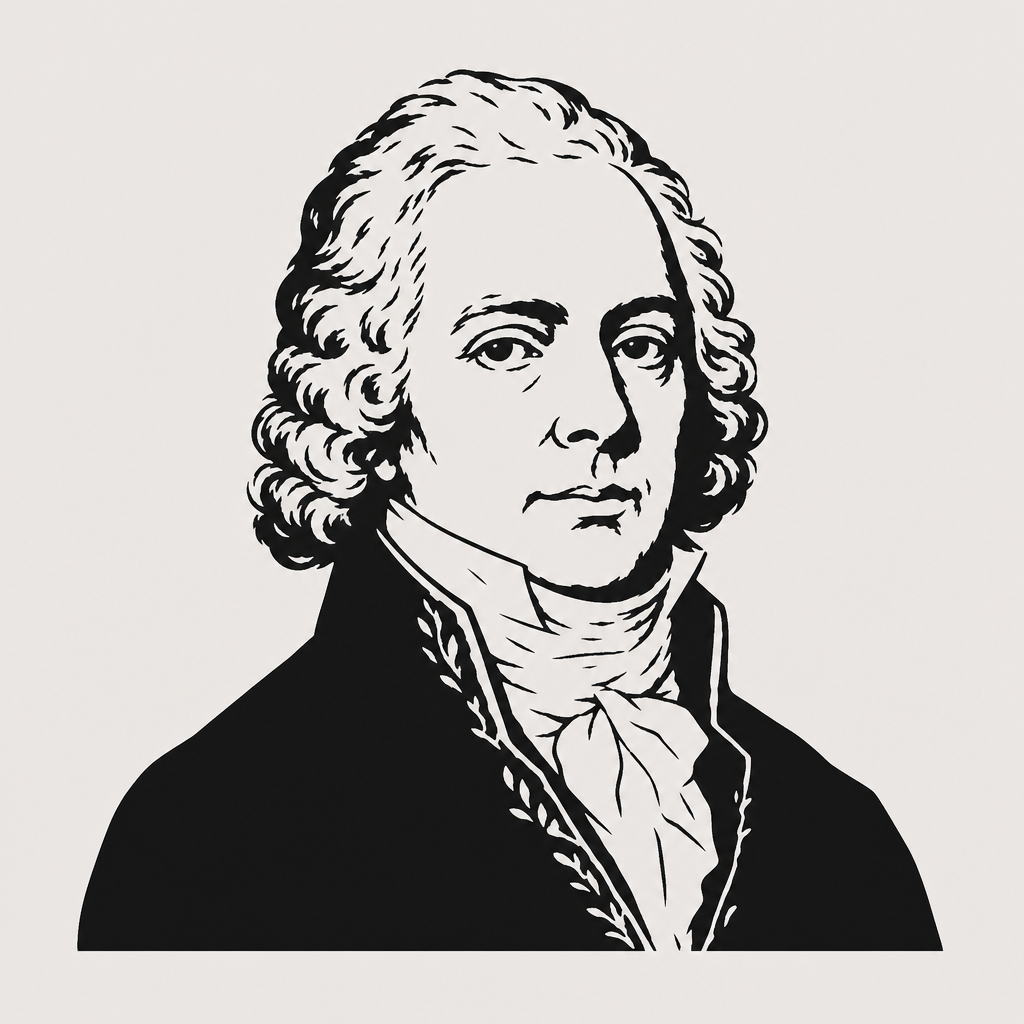
Charles-Maurice de Talleyrand
In January 1809 Napoleon stood before his court and screamed that his foreign minister was a thief who would sell his own father — “shit in a silk stocking,” the Emperor is said to have added. Talleyrand leaned against the mantelpiece, his lame foot taking the weight, his face registering nothing. Napoleon was right about the treachery: the man had already begun selling the Empire to its enemies. Yet the Emperor did not dare arrest him — and within five years that immobile figure would hand Napoleon’s throne to the Bourbons and dictate terms to the men who had beaten France.
He was born in 1754 into a grand but cash-poor noble house, and a limp decided everything. Unable to be a soldier, passed over as heir, he was pushed into a Church he never wanted and ordained without a shred of vocation. When the Revolution came, the Bishop of Autun read which way the world was falling: in 1789 he proposed nationalizing the very Church wealth he had spent a decade defending, celebrated Mass for a crowd of 300,000 at the Revolution’s first festival, and was excommunicated by the Pope. It was the first of six regimes he would serve and, one by one, abandon — never, he insisted, before each had first abandoned itself.
The betrayals were real and often paid in cash: his agents demanded a bribe from American envoys in 1797, and he took foreign money for Napoleon’s secrets from 1808. But twice, when France lay beaten, the survivor’s instinct and a genuine conviction — that France had reached its natural limits and needed only peace — pointed the same way. In 1814 he seated the Tsar of Russia in his own Paris house and won France a treaty of astonishing leniency; at the Congress of Vienna he arrived as the envoy of the defeated aggressor, excluded from the room, and split the victors with a secret alliance until France was a great power again.
He died in 1838, an ex-bishop who signed his reconciliation with Rome in his final hours and reportedly insisted the holy oil touch the backs of his hands, not the palms — because those were a bishop’s hands. His name became a common noun for both the diplomat of genius and the conscienceless turncoat. Napoleon, who had every reason to hate him, called him a man of great immorality and, in the same breath, the most capable of all his ministers. Both halves were true, and history has never been obliged to resolve him.