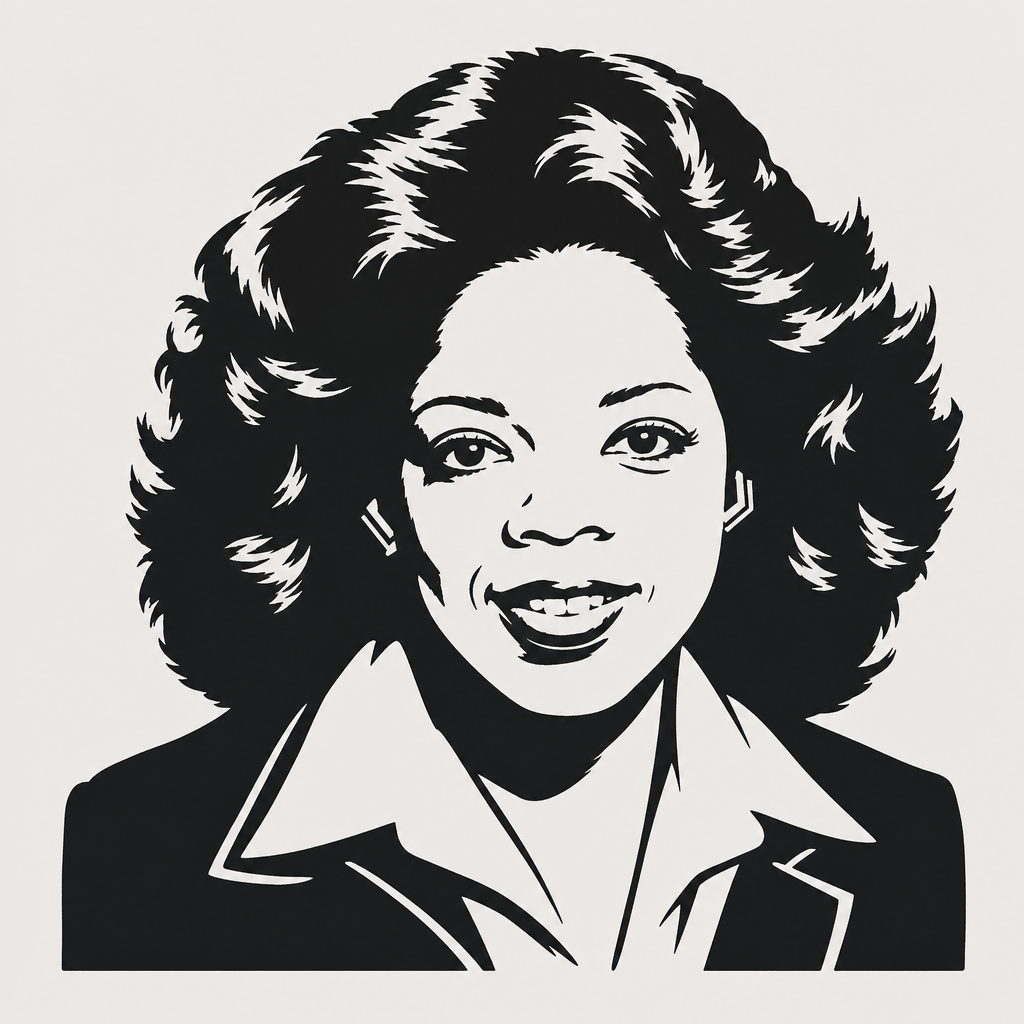
Oprah Winfrey
In Baltimore in the late 1970s, Oprah Winfrey was failing at television news. She cried too easily; news wanted composure and distance. So the station parked her on a local morning talk show — supposed to be a demotion, maybe a stop before firing her. She came off that first broadcast with the sensation that this was what she should have been doing all along. It felt, she said, like breathing. That discovery changed American media: Winfrey’s gift was not detachment but presence, the ability to sit across from a stranger and make millions feel they were also in the room.
Born in 1954 in Kosciusko, Mississippi, to a teenage mother, she learned early — reciting Bible verses in her grandmother’s church — that words could gather a room. Her Milwaukee years were unstable and traumatic; she has said she was sexually abused between the ages of nine and thirteen, and at fourteen lost a prematurely born son in infancy. The turn came in her father Vernon’s strict Nashville household, where discipline was a schedule: honors student, speech-competition winner, a radio job at seventeen, television by nineteen.
When AM Chicago handed her a struggling morning slot in 1984, she took it from the bottom of the ratings to the top within months. Nationally syndicated as The Oprah Winfrey Show in 1986, it pushed daytime talk toward intimacy — abuse, addiction, grief, recovery — and made the private speakable. The less visible move mattered just as much: through Harpo Productions she took ownership of her own show in 1988, becoming one of the rare performers, and rarer Black women, to control the machinery behind her national platform. Oprah’s Book Club could make a bestseller overnight; the “Oprah Bill” for child protection became law in 1993; her endorsement helped validate a presidential candidate in 2008.
Her legacy is mixed because her influence is vast. She helped millions speak about wounds and self-worth, expanded what a Black woman could represent on television, and changed publishing — while also helping build a culture where confession can become performance and emotional resonance can outrun evidence, as the James Frey memoir scandal showed. She is best understood not as saint, guru, or brand, but as a broadcaster who discovered that her truest medium was trust — and who, uniquely, owned the thing that bore her name.